The Games of 2011: Part 2
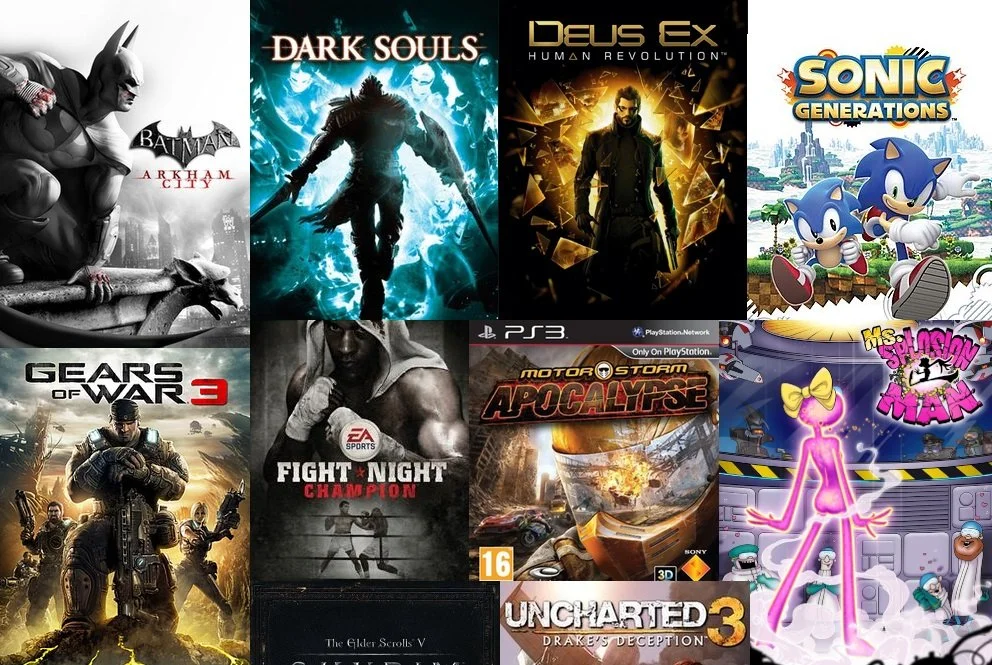
It’s time for Part 2 of my personal, non scientific, totally subjective, please don’t get angry at me, Top 15 Games of 2011! If you haven’t yet read my equally baffling first part of this list, please check it out here.
Some obvious choices and some not-so-obvious choices ahead, I hope you enjoy!
5) Shadows of the Damned
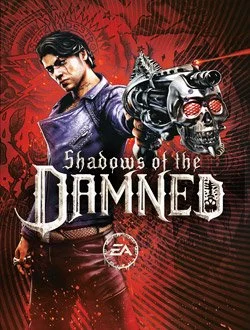
Release Date - June 21, 2011 (NA)
Developer - Grasshopper Manufacture
Publisher - Electronic Arts
Platform - Xbox 360, PlayStation 3
Shinji Mikami (director of Resident Evil), Akira Yamaoka (composer for Silent Hill) and Suda51 (director of Killer 7) all working together on a ‘punk rock’ psychological horror game.
That sentence alone should be enough to convince most people to at least give this game a shot, it’s certainly all it took for me. All three are legendary figures in the gaming industry and they delivered a unique and extremely memorable action horror title with Shadows of the Damned.
Taking the gameplay formula of Resident Evil 4 with a third person shooter bend, the game follows Garcia Hotspur; Demon Hunter. When his girlfriend is kidnapped by the Lord of Demons (AKA ‘Fleming’), Garcia follows Fleming into hell to retrieve her. He takes along his friend ‘Johnson’, a transforming demon that is an advisor, your motorcycle and your guns (all of them). Yes, this game has some delightfully bizarre sensibilities. The aesthetics of the game are equally strange with some great hellish landscapes to explore, freaky demons to fight and that unerring punk rock look that makes it quite unlike any other horror game I’ve played.
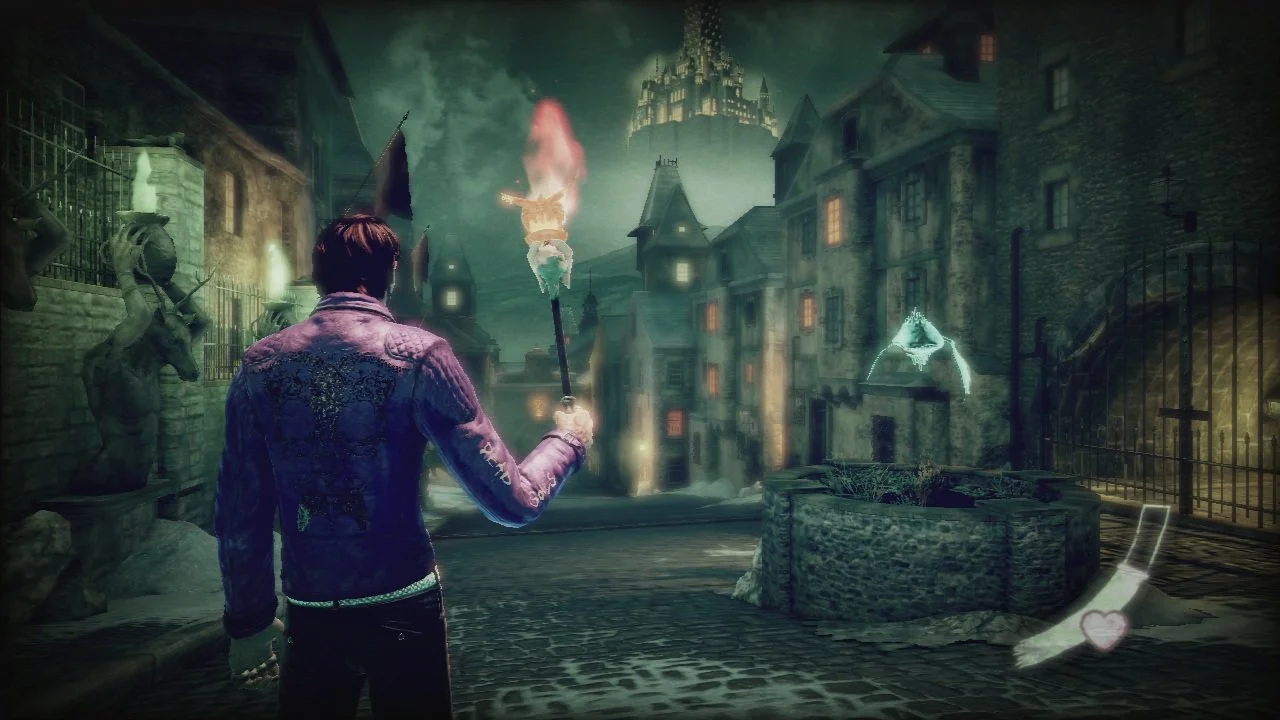
With Akira Yamaoka at the helm, the soundtrack is equally stylistic and up there with his best work on Silent Hill in my opinion. Of particular note is the vocal tracks where Yamaoka teams up with Mary Elizabeth McGlynn, her haunting vocals and Yamaoka’s dreamy music make for some incredibly immersive tracks.
The gameplay may not be as polished as Resident Evil 4 but makes up for it with the slick style and fun weaponry. Johnson is all of your guns, and improving your arsenal means transforming him into new guns, all variations of skulls. The basic handgun (or ‘Boner’, yes that’s another dick-joke) is the starting weapon, but you’ll soon unlock machine-gun style variations, shotguns and even bazookas. You’ll find that you’ll need different ones for different tasks, whether it’s taking down mobs of enemies or carefully aiming for weak spots on some troublesome tough enemies.
This is a game that I was genuinely worried would be forever lost in rights-hell (as fitting as being in a form of hell would be for this game). Thankfully, the game has since been re-released on PC and modern platforms as the Hella Remastered edition. A game that was unfortunately overlooked on release, I urge you to check out this awesome horror title.
Thoughts from the Younger Generation…
“Shadows of the Damned in 6th is a fucking crazy take, Ngl. Low key game suuucks, I wouldn't put it there for sure” - Antanov
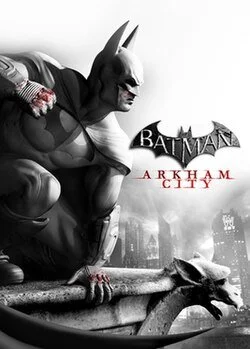
4) Batman Arkham City
Release Date - October 18, 2011 (NA)
Developer - Rocksteady Studios
Publisher - Warner Brothers Interactive Entertainment
Platform - Xbox 360, PlayStation 3
Talk about a hard act to follow. Batman: Arkham Asylum (2009) was considered by many (including myself) to be the best super-hero game ever made when it came out. A sequel would have a hard time improving on it and recapturing that great mix of action, stealth, exploration and atmosphere. Somehow though, Rocksteady Studios managed to capture that lightning for a second time.
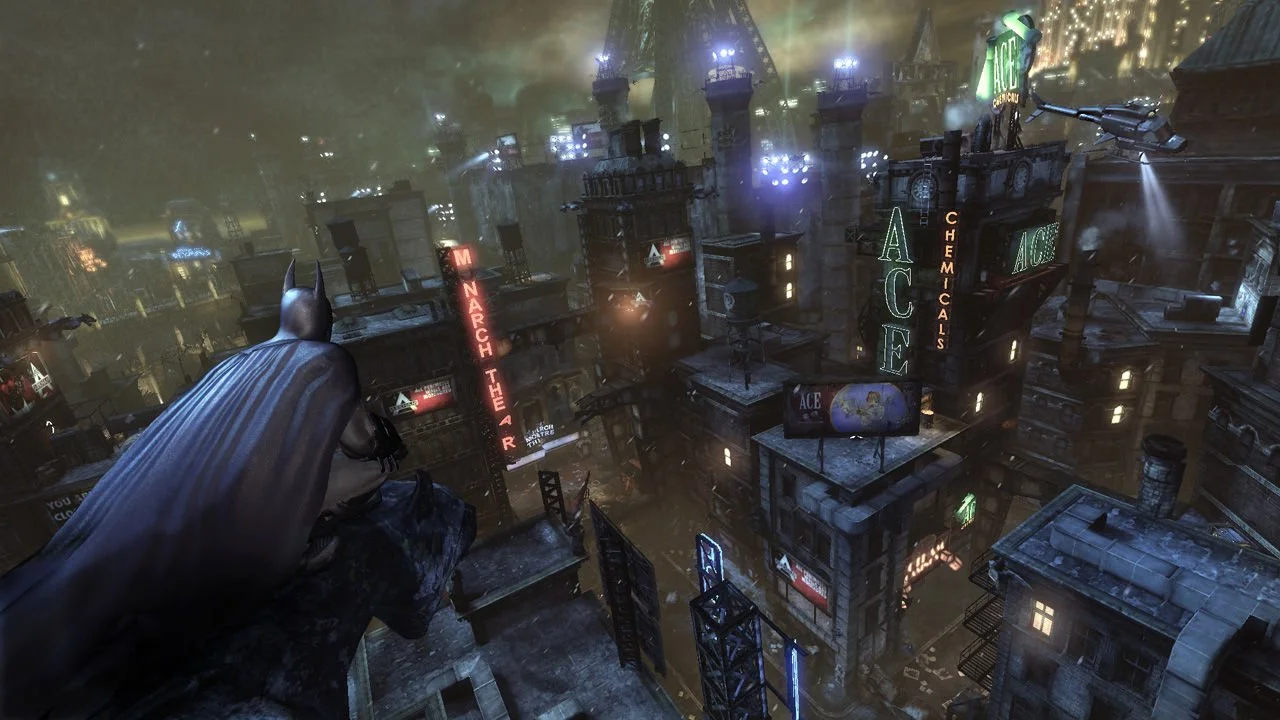
Arkham Asylum took place entirely inside the titular mad-house. While it was a very large and labyrinthine building, it was relatively small compared to the play-area in Arkham City. This time, a whole chunk of Gotham City has been cordoned off and basically become a huge prison. This means that Batman has a lot more open space to explore which really makes the game feel like a bigger, grander adventure.
We once again get to interact with a lot of Batman’s rogues gallery of villains, including a returning Joker (once again voiced by the legendary Mark Hamil). The combat is as great as it was in the first game, with a good ‘triangle’ system of blocking, reversals, and various strikes. There’s enough challenge to enjoy the combat at a base level, but the real joy comes from stringing together combos and getting high scores. It got downright addictive and felt like playing an old-school arcade game chasing those high scores. Indeed these were even made into challenge rooms where you’d have set scenarios to beat and scores to achieve.
The other side of combat was the stealth sections, and it fits perfectly with the character of Batman that the game should make you feel like a phantom in the night, picking off his enemies. It’s possible (and ideal) to take out the bad guys one by one when you’re in a stealthy area, calmly planning your attack and executing it to perfection. You can hang from the rafters, pull enemies off ledges, sneak up behind them and use your gadgets (like batarangs and night vision) to pull off some intricate and really fun plans. The real kicker? You’ll even hear the goons that you’re hunting start to panic and make comments as they get picked off one by one!
A word has to be said about the amazing visuals too. The noir-styled city is lit by neon signs and moonlight, and the play area feels massive. Some footage was recently doing the rounds on social media talking about how impressive it is that a game from 2011 can still look so good in 2026, and it’s a real testament to the developers that they could make such a great looking game.
Arkham City is definitely a game that managed to live up to the expectations set by its predecessor. The gameplay remains so tight despite having so much variety, and the game world is a joy to explore. Far from feeling like busy-work that a lot of open world games are at risk of falling into, the game provides tons of activities and all of them are equally enjoyable to complete. Wrap that up with some stellar voice acting and graphics and you’ve got a hell of a game.
Thoughts from the Younger Generation…
“I'm not even the biggest fan (still thought they were very good) but fully agree that arkham city is among the shining examples of what a sequel should be.” - Barnsey
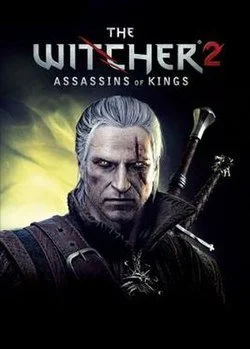
3) Witcher 2: Assassins of Kings
Release Date - May 17, 2011
Developer - CD Projekt Red
Publisher - CD Projekt
Platform - PC
The King is dead. The Witcher bleeds. Do not despair - there is still hope!
Another case of a game with a very hard act to follow, The Witcher (2007) was an unexpected hit. An RPG based on a series of Polish fantasy novels, the game was very lovingly put together by the now famous CD Projekt, and received glowing reviews and quite a following. Witcher 2 would take the game in some new directions, while retaining the passion and love that made the first title so special.
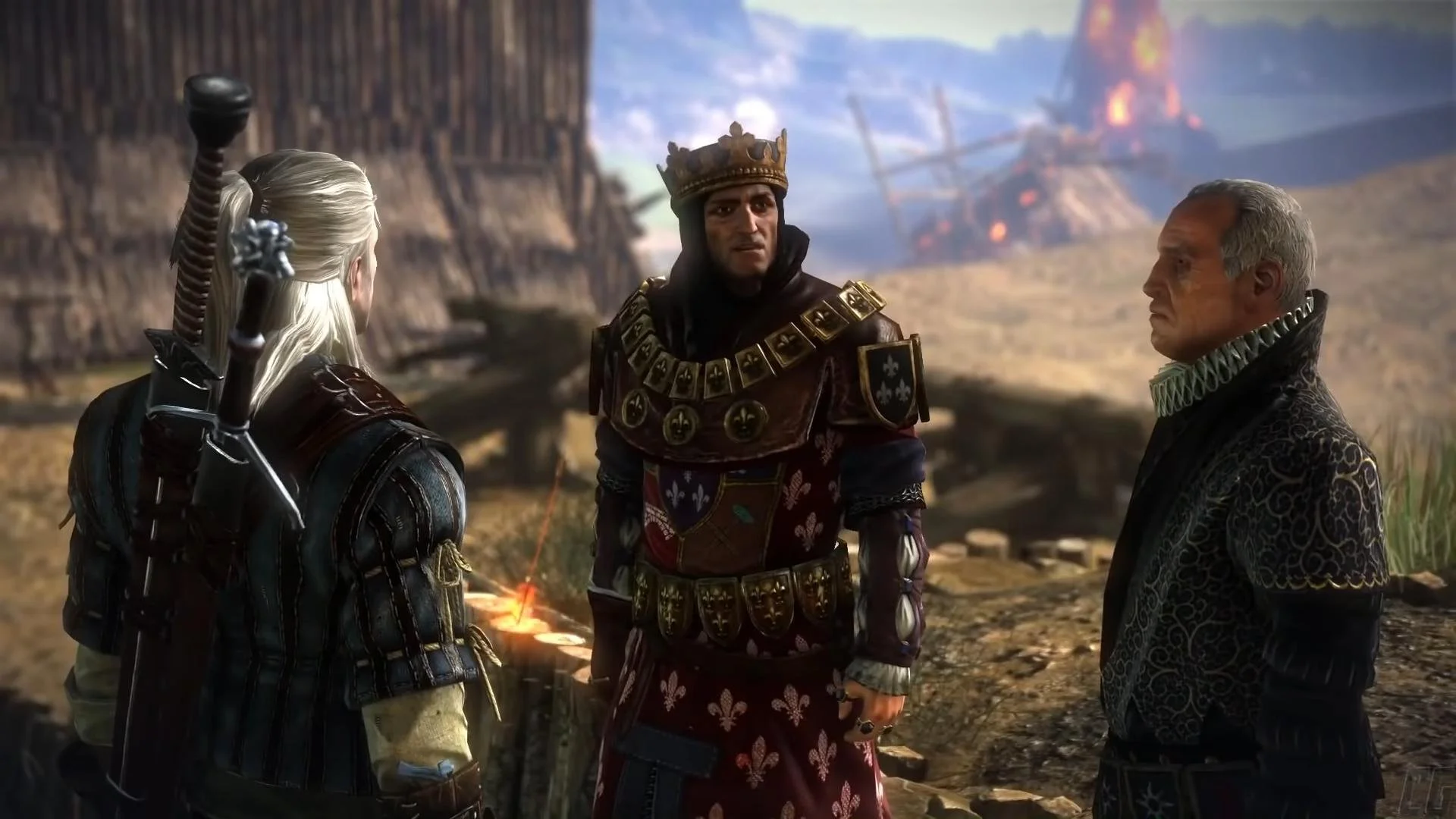
Taking place not long after the original game, Witcher 2 opens with a spectacular battle taking place. After the events of the first game, Geralt the Witcher has become a very valuable soldier for the king of the realm. The kingdom is locked in battle and a castle siege is about to take place. Waking up on the morning of the battle, players are introduced to some very impressive scenes of siege engines battering castle walls, mercenaries and knights preparing to storm the walls and incredible vistas. This game looks good. Holy moly does this game look good. The first Witcher was made on a very old engine, and despite some lovely art direction, technically looked quite poor in comparison to some of its contemporaries. Not so for Witcher 2 which has to be one of the best looking games released in this era.
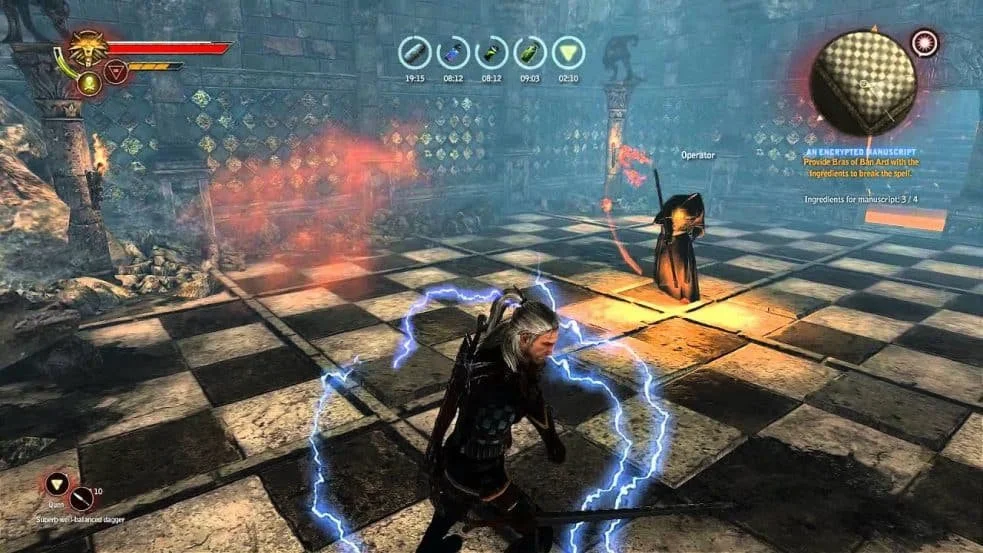
The opening sequence also showcases the new combat and mechanics of Witcher 2. While the original was much more traditional RPG styled in the combat and mechanics, Witcher 2 has a more action-oriented slant. While the game has faster combat with parries, strikes and dodges, the battles will be very very difficult without making use of pre-prepared potions and magic (and even then, they are quite difficult). Witchers are specialty monster-slayers trained from birth, and their trademarks are use of magic and potions, so making them so important in this game fits the narrative and also creates a new level of gameplay whereby you need to plan out your encounters and make some meaningful decisions around where to invest your XP. Having a good magic spell to slow your opponent, or a potion that lets you regenerate your health a little will be the difference between winning or getting sliced in half by a wyvern.
The original game had some fantastic narrative choices to make as the kingdom was in the midst of a growing war between humans and non humans. All the factions were shades of grey, and it wasn’t easy deciding who to side with. Once again, the growing divide means that Geralt must choose his allegiance in Witcher 2 and impressively, a crucial choice near the beginning of the game will change some large chunks of the mid game as you side with one of two characters. Unlike so many games, it really feels like choices matter.
Boss fights make a return and are bigger and more impressive than ever. The beasts that Geralt has to fight can be very awe-inspiring and creative. Ranging from Kraken’s attacking a sea-side town to animated, living flaming siege weapons. The difficult combat means that these encounters are difficult and make you feel very intimidated, yet extremely accomplished when you finally find the right strategy to defeat them.
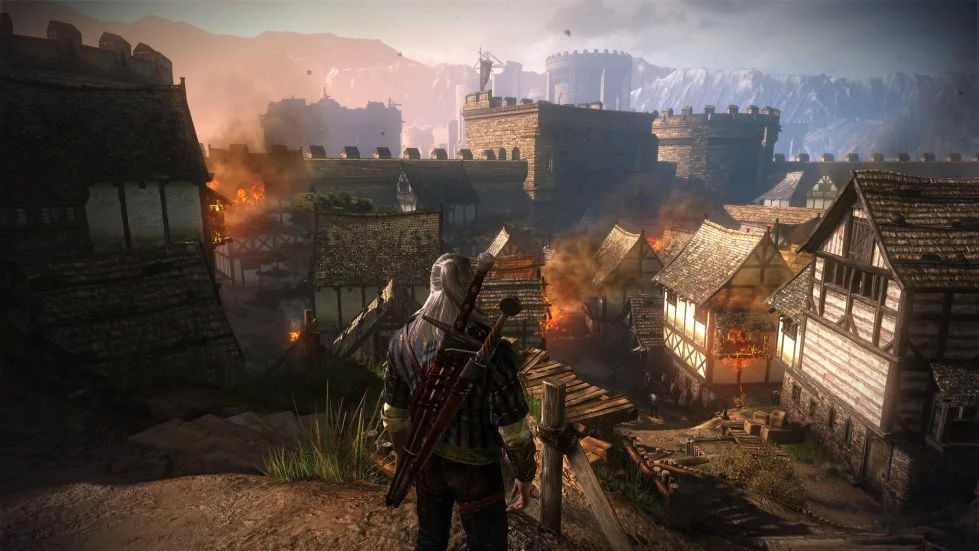
In amongst the main story are the usual Witcher ‘contracts’. As a semi-open world game, you can take on some side-missions. There are less than the first game, but they’re more involved this time around. It all comes back to Geralt doing what he does best, hunting monsters. These moments in between the major encounters of exploring the city, upgrading your gear, hunting small monsters for contracts make up a large portion of the game and also allow you to really drink in the amazing ‘low fantasy’ (I think that’s an accurate description, literature snobs please correct me) world that has been created. Each area has its own distinct feel and every NPC you come across and interact with is great and fleshed out. Conspiracies unravel, plots thicken and friends and enemies are made all the way to the end of the game.
I think that Witcher 2 (and especially the original Witcher) are somewhat unfairly overlooked now due to the juggernaut that is Witcher 3: The Wild Hunt (2015). The games all have their own unique feel to them, and there’s many things that Witcher 2 does better than the third game in my opinion. The story and characters are genuinely compelling, the game looks amazing to this day and the gameplay is probably the most difficult and rewarding of the entire franchise. A special game that deserves to be revisited by any RPG fan.
2) Dark Souls
Release Date - September 22, 2011
Developer - FromSoftware
Publisher - Namco Bandai Games
Platform - Xbox 360, PlayStation 3
I can’t believe this isn’t #1 on my list. You probably can’t either.
This game truly is something special. While it was by no means the first of its kind (see Demon’s Souls (2009) for a spiritual predecessor), it laid the groundwork for so many games to come and coined the term ‘Souls-like’ as a game genre. Amazing gameplay, incredible lore, tons of replayability, it’s easy to see why this game is so loved. Oh, and it’s also quite hard.
When I first tried out Dark Souls near release, I remember what kept getting repeated online in discourse about the game; It’s really HARD, Prepare to DIE, this game is unashamedly DIFFICULT. So when I first arrived at Firelink Shrine and stumbled onto the respawning skeletons that destroyed me in a couple of hits, I thought ‘OK wow, this game IS hard’. Bouncing off that section a few times made me think this was the difficulty that people were talking about and maybe this game just isn’t for me. I was close to finding something else to play when I asked online and was told that the skeletons aren’t meant to be fought so early on, and to keep exploring. Soon after I was in the Undead Burg and the game just opened up. I became very invested in exploring the remnants of the great region of Lordran and picking up new gear to survive. It was still hard, but now it was hard but fair. And addictive.
The game is obviously an action RPG, but at it’s core, it still is an RPG. There’s so many different classes to play as and ways to play. Each weapon you pick up has a different properties, and usually, a different move-set. These alone can radically change how you handle encounters with enemies and bosses, let alone the stats and build. Once it all clicks, it’s easy and very fun to start tailoring your character to a playstyle you like. Do you want to be a warrior with lots of strength and dexterity, effortlessly using melee weapons? Do you want to be a sorceror that hurls magic at your opponents from a distance? Do you want to play any number of characters in between? The variety in ways to play is really staggering and a big part of the reason the game is so replayable. When everything clicks into place it just feels so damn good.
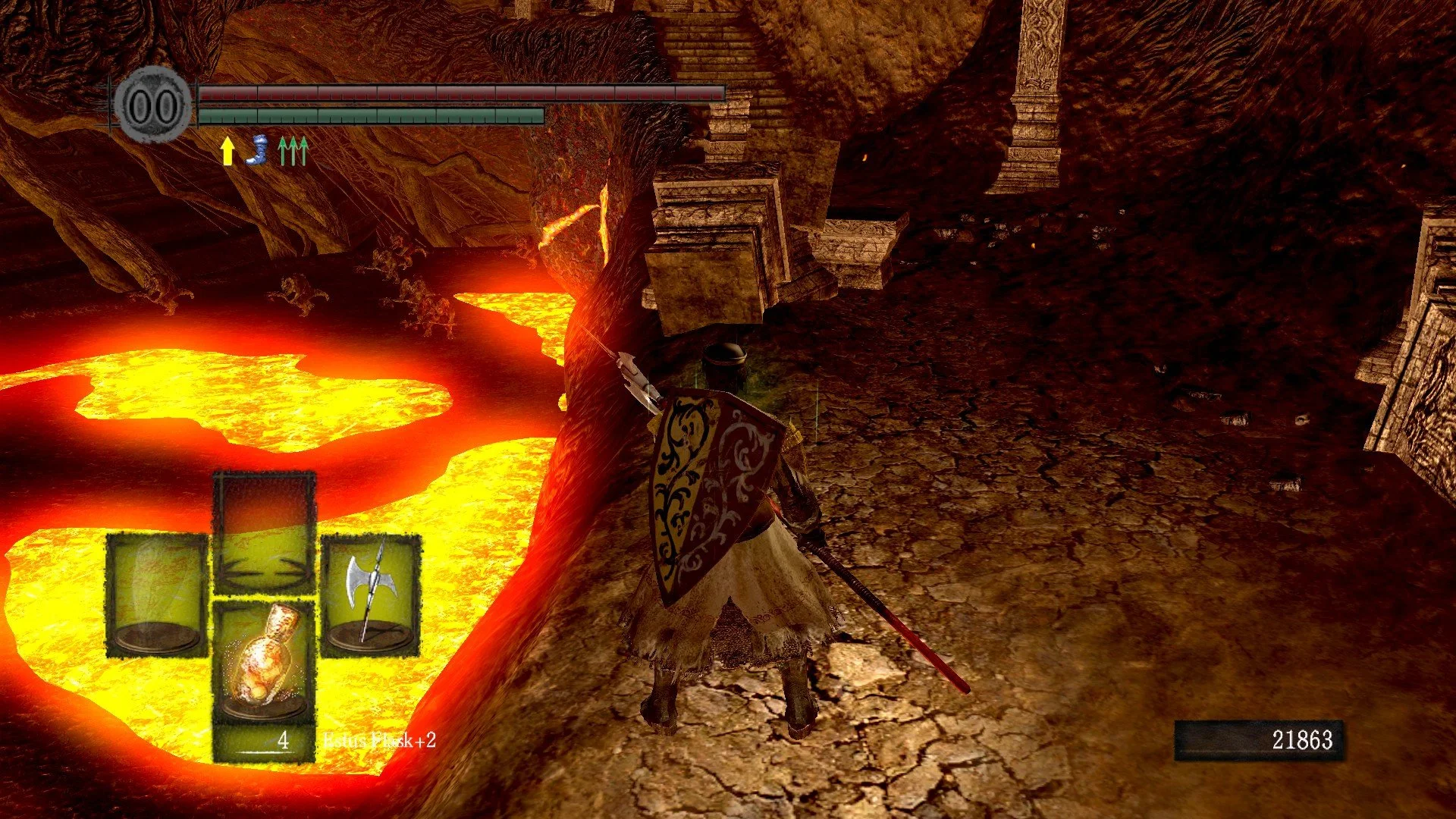
The level design of Dark Souls might still be the best in all of the Souls series. Lordran is a city that is rich with secrets, unique regions and hidden paths. It’s as complex vertically as it is horizontally, and the entire play area feels authentic. There’s no teleporting between areas (not at the start anyway), so you’ll be running through different regions that feel like ‘levels’ but are interconnected to each other in ingenious ways. The bliss of finding a shortcut back to a ‘hub’ area is unmatched.
I mentioned that the game’s areas feel like ‘levels’ of an older game, such as Castlevania. The genius ‘bonfire’ system means that each time you sit at a bonfire, you will have all your health and consumable healing ‘Estus’ topped up to full, but at the cost of every enemy also re-spawning. It effectively acts like a checkpoint for the ‘level’ and means that you can’t be cheeky and take out enemies one at a time, running back to heal up. If you get killed, you have to make the whole run again. I remember the feeling of despair the first time I had to get through the Undead Burg with my starter character, not really knowing the mechanics that well and going in totally blind. The idea that each time I rested all my enemies would come back too felt like hell. The more I played, the more I started to enjoy it.
Often these runs will culminate in a boss fight, and oh boy the boss fights. Demon’s Souls had numerous memorable bosses to take on, but those mostly felt like ‘puzzles’ to be solved. They often had a trick to beating them, or some kind of gimmick rather than pure pattern recognition and battling them with your learnt skills. Dark Souls was the game that really made the boss battles a big part of the experience in my opinion. That’s not to say that the bosses also didn’t have some clever tricks to make them easier or more manageable, as using the environment to your advantage is a massive part of the game. The Capra Demon for example is notoriously tough for new players, but the tiny room he is fought in is critical to defeating him. Using the stairwell to funnel him into position is a key design element of the boss fight. Other bosses are more straight-forward affairs and just require excellent mastery of the game’s mechanics to overcome them. Beating bosses is supremely satisfying not only for the fact the boss is defeated, but it almost always results in finding another bonfire too. That ‘run’ is no longer required and you have unlocked a ‘new level’. All done seamlessly in the greater open-world of Lordran.
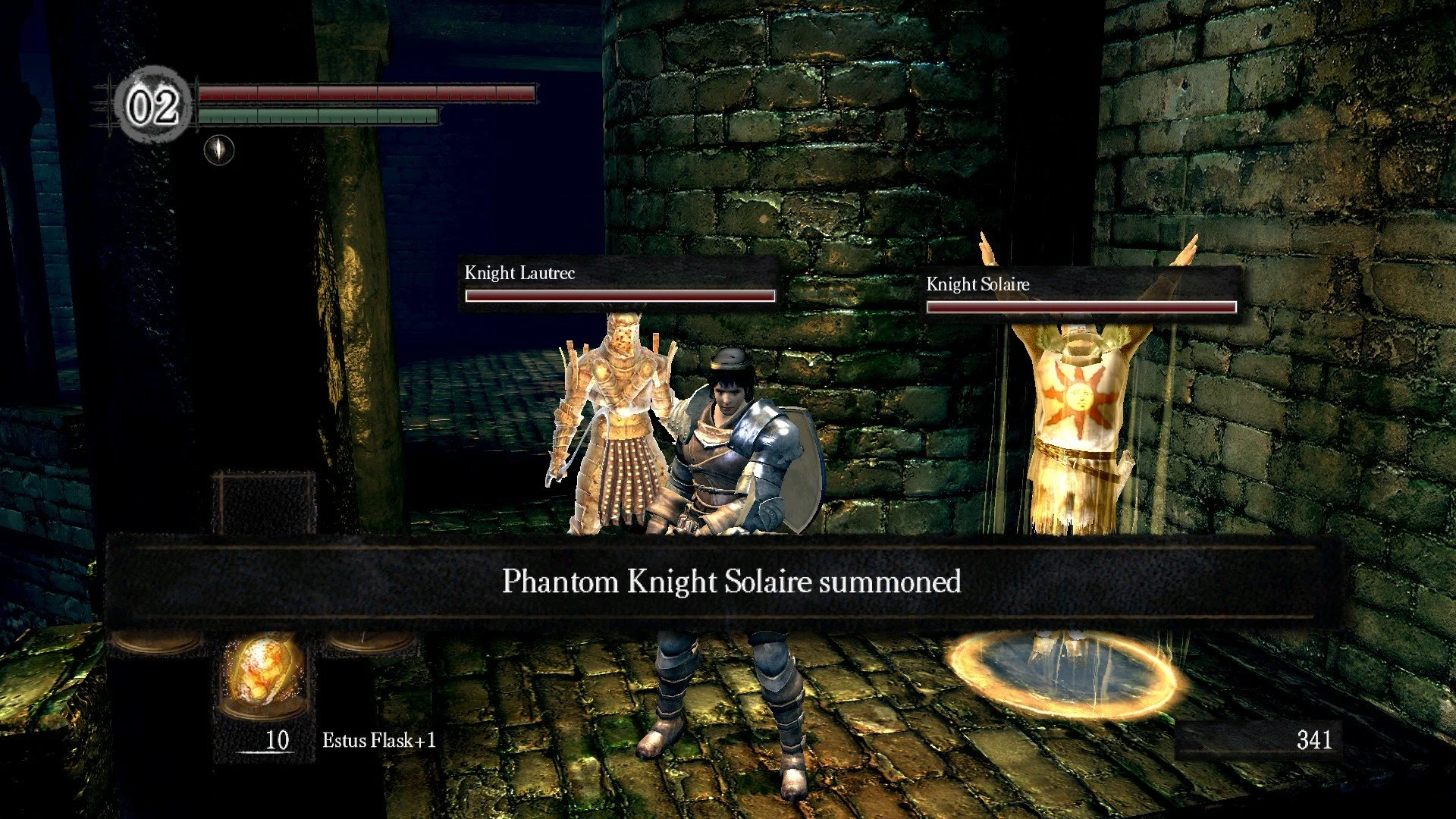
The game does have a story, although it’s told in a very interesting way. Beyond the opening cut-scene that sets the stage, the player is free to read as much or as little into the game’s background and story as they wish. Most of the story is pieced together from environmental storytelling, item descriptions and limited NPC dialogue. The overall narrative of the game and the lore is quite rich, and discovering it by piecing little bits together is very intriguing, and leaves lots of room for discussions as players put together bits of the story at their own pace, often discovering different hints to other players before forming a more cohesive understanding. It’s all pulled together with a unique and consistent dark fantasy world.
Dark Souls is also famous for its brilliant multiplayer system. Players are mostly confined to their single player experience, but other players online can leave and rate messages on the floors of areas with tips or advice. Beyond this, players also have limited capacity for either co-operative play or even ‘invasions’ that result in PVP battles.
Dark Souls is a game that I once referred to as ‘maybe one of the best games ever made’, and I stand by that comment. I think it has faults, certainly, but the sum of its parts and the genius of its overall design still impress me. This is a game I have gone back to play recently (this year in fact) and loved it even more than the first time I played it.
Thoughts from the Younger Generation…
"Whether you love it or hate it, prefer its predecessor or sequels, think it’s the best game ever made or that it shat the bed in the second half, the undeniable thing about Dark Souls is that it is a very interesting game that generates a lot of discussion and debate. This is why it has remained relevant over the last 15 years and why I agree that it deserves a spot on this list." - Barnsey
1) Total War: Shogun 2
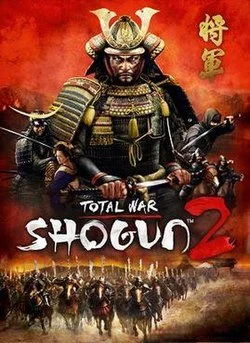
Release Date - March 15, 2011
Developer - Creative Assembly
Publisher - Sega
Platform - PC
Perhaps a surprise for many readers, but trust me when I say this isn’t a ‘ragebait’ choice, or a contrarian opinion. Choosing between this and Dark Souls was a tough choice, but this is my personal top 15, and when I weighed up how much of Shogun 2 and Dark Souls is burned in my memory, the total hours played of both games, and the overall enjoyment, Shogun 2 edges it out.
The Total War series might be one of the most prolific grand strategy games out there, mixing turn-based grand strategy with real-time tactical battles (they are not RTS, or Real-Time Strategy games, and it gets my goat when people refer to Total War as such). The series dates back to the original Shogun: Total War (2000), but my first foray into the series was the excellent Rome: Total War (2004) which is still one of my favourites in the franchise. Putting many hours into conquering the known world with Rome, I picked up Medieval II: Total War (2006) and loved it equally. More sequels were to come in between, but Shogun II was the one that really recaptured my love for the series.
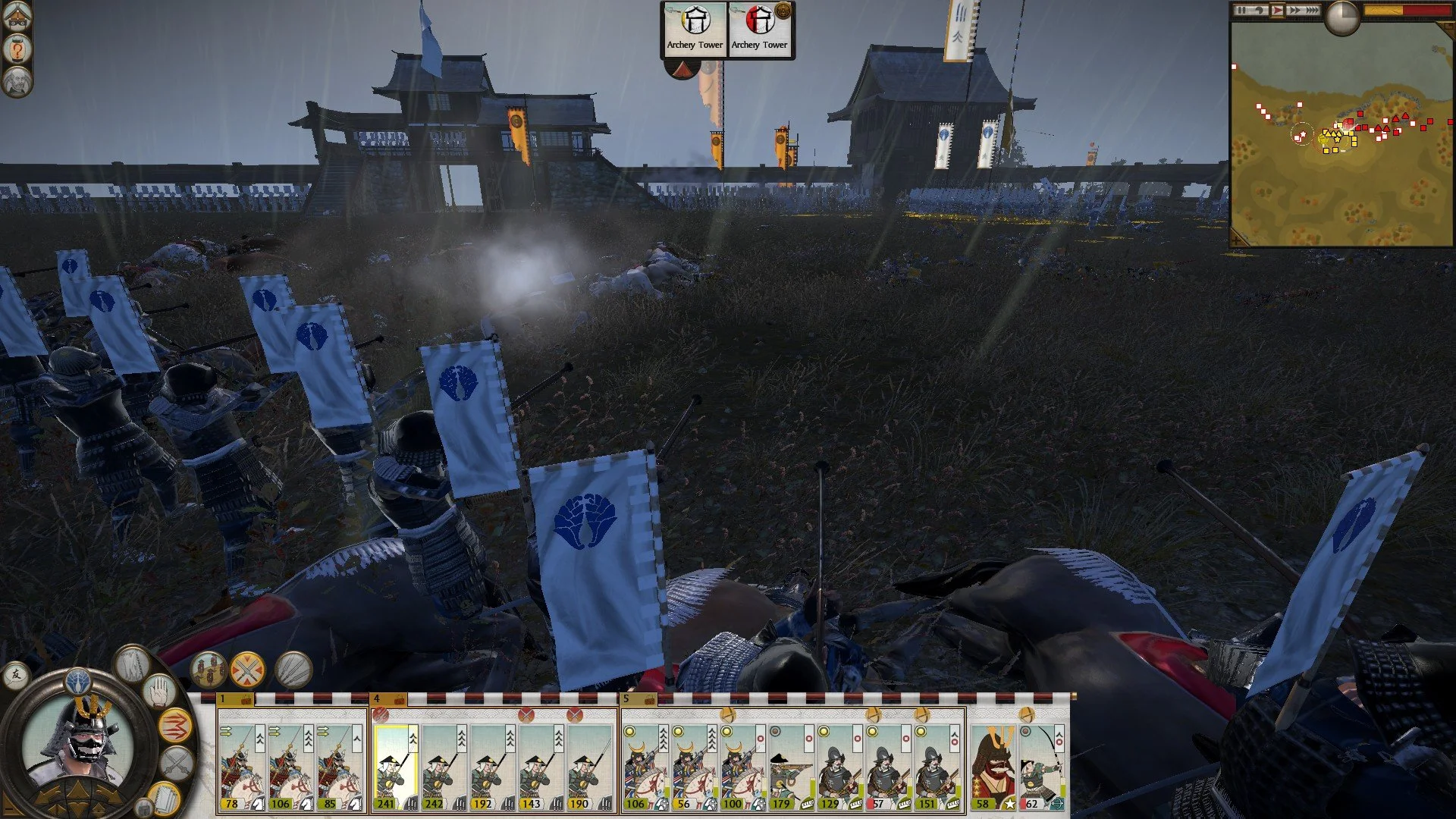
Shogun II continues the hallmark gameplay style of the Total War franchise, with a mix of grand strategy turn-based segments where players will be developing their settlements with improvements, hiring agents to do their bidding, moving armies and generals around the map and engaging in diplomacy with other factions. This is where you’ll be looking at the big picture, cutting trade deals, putting your best generals into position for invasions and defence of your land, and researching new technology and strategies to improve your chances against the many other factions. When two armies meet on the battlefield, the game will go into the real-time tactics portion, and this is where all your planning and work in the grand-strategy section will pay off. Battles will be unique as they take into account what units are in each army, what kind of terrain the two armies met on, what season the battle takes place during and if one side was ambushed or not. It makes for such a great variety of potential battles with so many variables changing the encounter each time. Is it a siege or a field battle? Is it taking place in winter during the snow? Or during summer? Is one side on a hill or mountain in a defensible position?
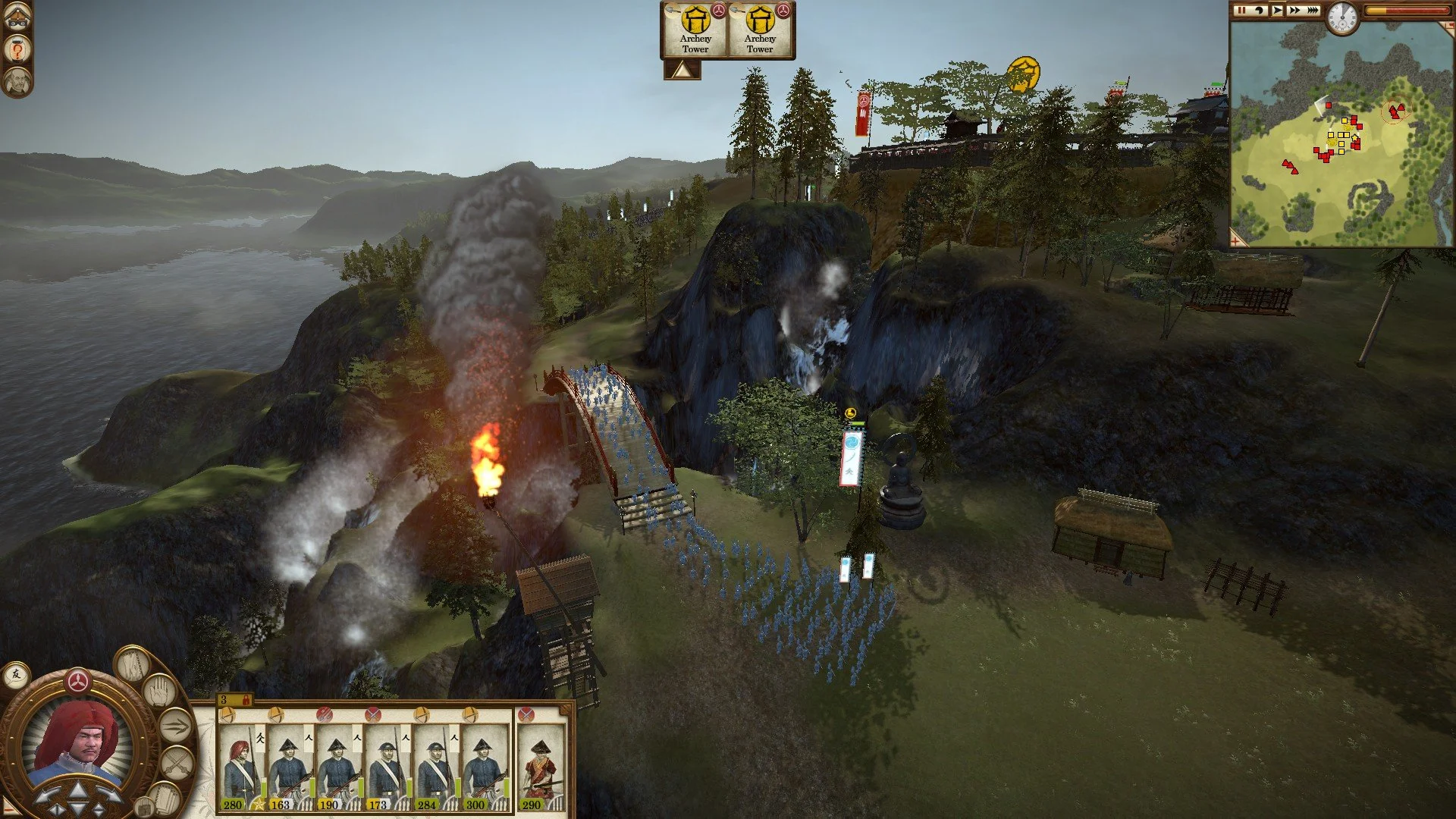
Once you’re in the battle itself, things like fatigue, armour quality, troop morale and your general or captain’s reputation and command ability all play a role too. Simply put, there’s a LOT to take into account and a lot that goes into influencing each battle.The more you play, the more levers you learn to use and the more immersive it becomes.
Taking place during the civil war period of Japan’s history known as Sengoku Jidai (Warring States), players take control of one of several factions vying for control of the island nation. Unlike most of the prior games in the franchise, the map is small and very focused. No conquering entire continents here, rather you’ll be battling for each province, every town being an important foothold. There’s less variety in factions than something like Rome or Medieval II, but each faction still has a unique feel to it. Some are excellent sailors and can train superior ships to take control of sea, some have better cavalry and will field better mounted units, while others are experts in espionage and can train superior agents. They all have different starting positions too, which can radically change your early game and long-term strategies as well.
The map might be smaller than other games that span continents, but it’s very rich. Different regions will have natural resources that are important to commerce or military. A region known for good iron supplies and blacksmiths will be able to create superior arms and armour, an area with hardy horses will train superior warhorses. By securing these areas you can not only improve your military output by leveraging the resources, but you can also trade them with other factions. Diplomacy is greatly affected by what your faction has access to, so securing something like warhorses early on will mean that you can now secure better trade deals and favourable outcomes as the other factions want something that you can provide. This kind of diplomacy was a big improvement over the prior games relatively simple wheeling and dealing.
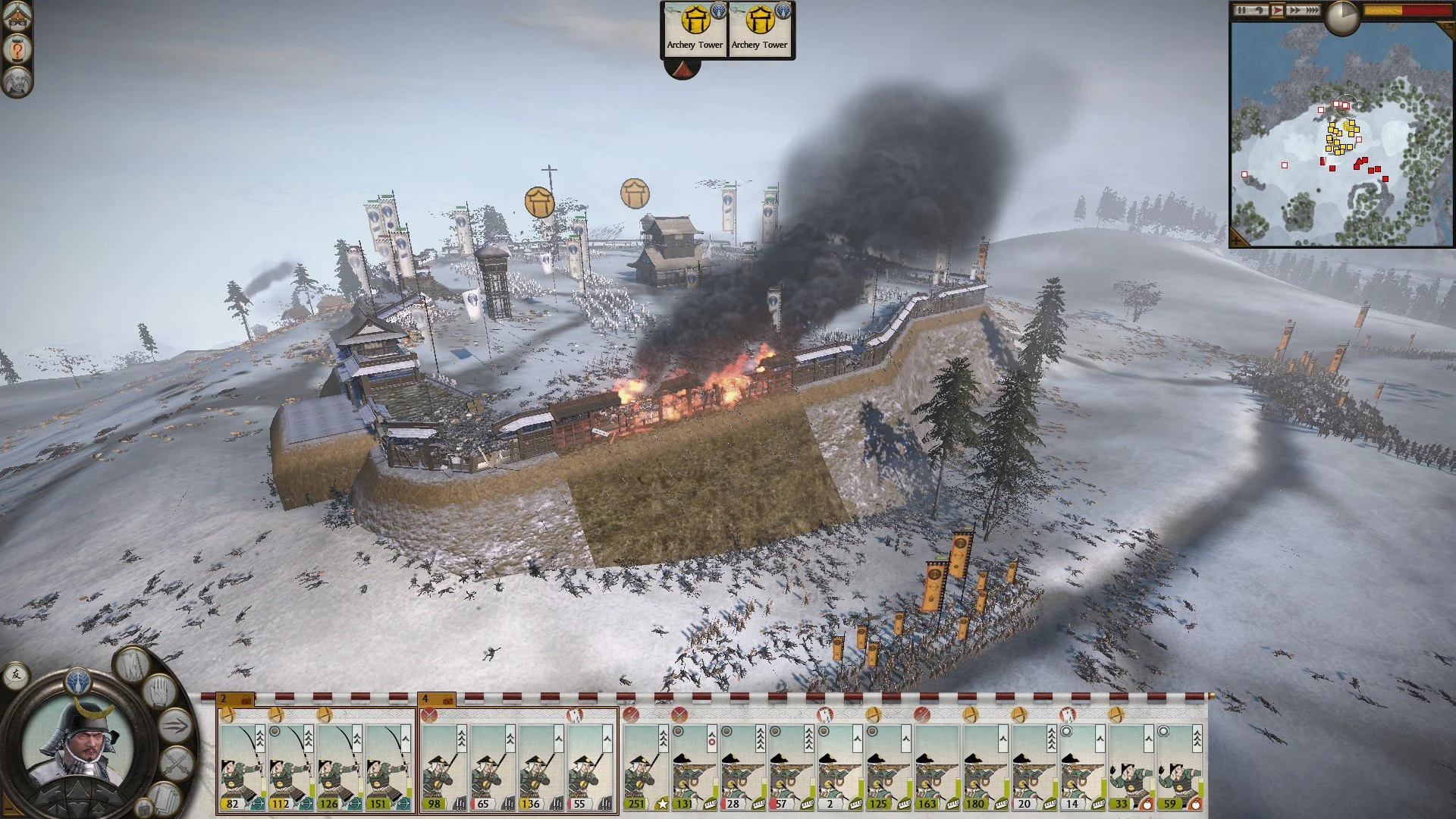
Some added flavour is included in the game via the religion and foreign influence. Historically this is a time in Japan where Christianity was being introduced to the country and trade was being done with Portuguese merchants. Players can choose to reject or embrace these foreign influences and both options have pros and cons. Embracing the foreigners means getting access to superior weaponry in the form of matchlock rifles and far, far superior ships armed with cannons that can tear apart the native made Japanese vessels. This also means that missionaries will be present and start spreading Christianity among the majority Shinto population. While it’s very possible to convert the population and embrace this new religion, the initial result will be lots of unrest amongst your population and long standing diplomatic penalties with more conservative factions elsewhere on the map.
The series has always had some impressive battles and visuals, but Shogun 2 is amongst the finest in the series, with some gorgeous landscapes to battle on, with lovely lighting effects and various weather conditions. The visuals seem to be inspired by the incredible Kurosawa film Ran, and brightly coloured armies, visceral action and gunpowder smoke all creating a feel that’s both gritty and beautiful at the same time. I definitely think that games such as this one get overlooked sometimes when it comes to art direction and style, which is a shame because this is a beautiful game. The great graphics are coupled with some very nice music tracks, both serene and contemplative music for the grand strategy moments and some higher intensity tracks for the battles. The voice acting is infamous, mostly for the ‘Shameful Display!’ line when a commander will run from battle. It never gets old.
Shogun 2 is a game that might not seem immediately apparent for a #1 of 2011 list, but hand on heart it’s the game that has given me the most enjoyment from 2011 for the past 15 years.
Coming away from this exercise, it’s been fascinating to see just how many great games came out in 2011, and it’s also given me a list of games to try that I haven’t yet. Dead Space 2, Catherine, DiRT, Dead Island and Fight Night Champion are all on my list to try sooner rather than later.
But first, maybe it’s time for me to re-install Shogun II for one more campaign run.